
 Music Production
Music for Video Games: A Production Guide
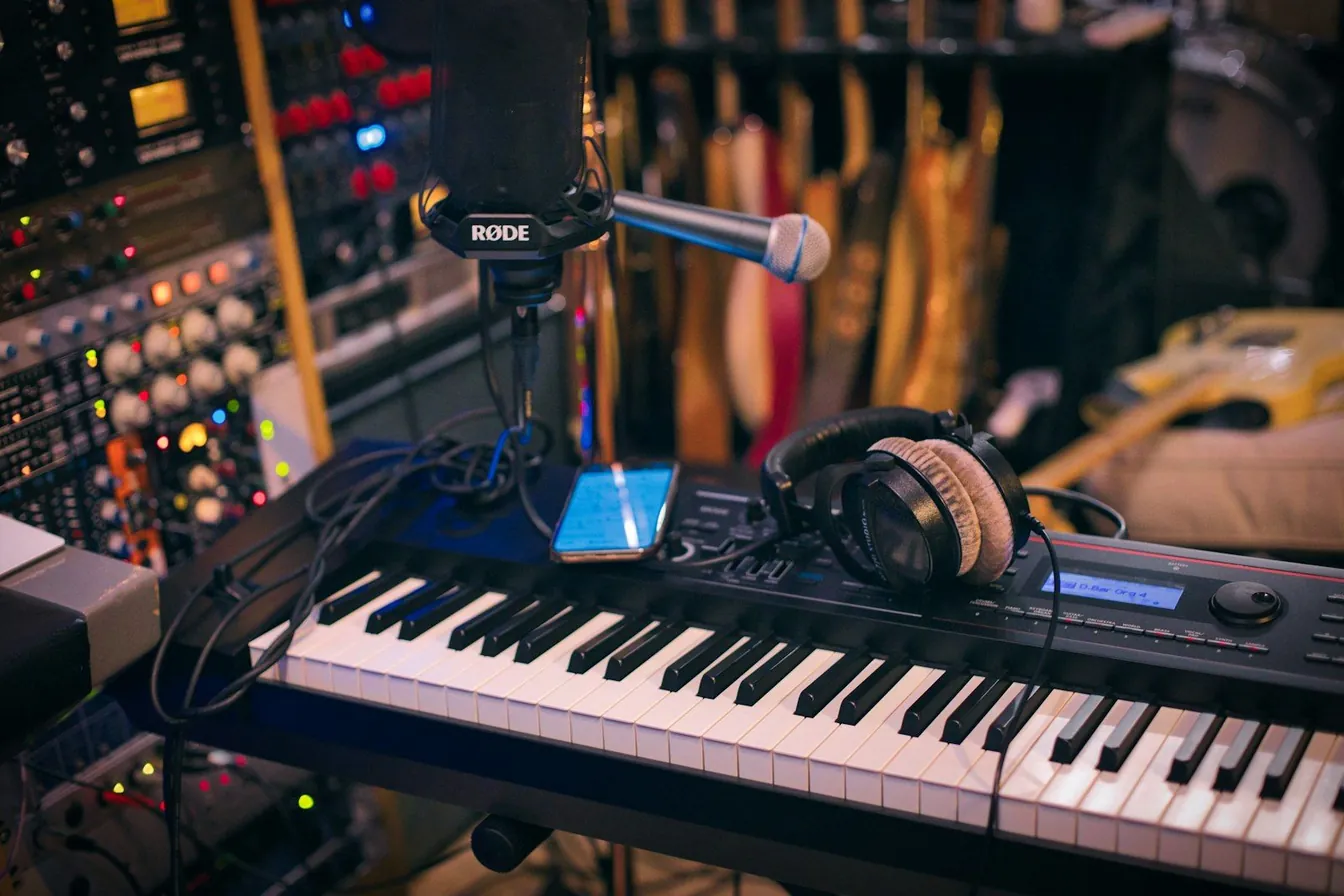
Game music is written to be reacted to: it loops under exploration, layers up in danger, and steps aside when the story speaks, which changes how it must be composed and produced.
If you are making a game, or commissioning music for one, understanding this interactivity is the difference between a soundtrack that feels alive and one that feels like an album playing in the background. Here is how the craft works.
How game music differs from film scoring
Film music follows a locked timeline; game music follows the player. Three consequences shape everything:
- Unknown duration: a piece may play for two minutes or twenty, so it must loop gracefully.
- Player-driven pacing: the music cannot know when combat starts, so it must transition on cue from the game.
- Repetition risk: anything heard for the tenth time must not grate.
Adaptive and layered scoring
The standard answer to interactivity is layering. A base layer plays under exploration; intensity layers stack in as danger rises; a combat layer replaces the mix entirely when the state changes. This vertical approach lets one composition serve many situations, and transitions between states are composed with as much care as the states themselves, using stingers, tempo-matched crossfades or short fills. Implementation happens through the game engine or audio middleware, which is why composers deliver assets built for those systems rather than a single stereo master.
Writing loops that do not fatigue
Loop writing is a specialised skill:
- Begin and end in compatible harmonic places so the join is seamless.
- Keep the top line from being too busy; variation belongs in the inner textures.
- Think in long harmonic arcs even across short loops, so time feels shaped.
- Leave dynamic headroom for the layers that will stack on top.
Careful music composition at this stage saves implementation pain later, because a loop that fights its own structure cannot be rescued by clever integration.
Production workflow for games
A game score project usually runs: a brief from the design team covering tone, references and the list of game states; sketch passes against concept art or early builds; approval of directions; full production with implementation in mind; and delivery of loops, layers and stingers with clear naming and loop points. Expect iteration against the actual build, because music that works in isolation sometimes reveals problems in game. Studios offering end-to-end music production for media can carry the project from sketch to implementation-ready assets.
Deliverables to agree up front
- Looping stems for each intensity state of every environment.
- Stingers for events: victory, discovery, danger.
- Menu and title themes with their own loop behaviour.
- Documentation of loop points, keys and intended layer combinations.
Frequently asked questions
Do I need audio middleware for my game's music?
For anything beyond a single looping track, yes. Middleware or engine audio tools handle the state changes, crossfades and layering that adaptive scoring depends on.
How much music does a game need?
It scales with the number of distinct environments and states, not with playtime. A well-layered system can cover hours of play from a compact set of compositions.
Can live instruments be part of a game score?
Absolutely, and they add warmth that samples struggle to match. The practical requirement is that recorded parts fit the looping and layering plan, which means planning takes before production begins.
Building a game that needs music which reacts to the player? Talk to Sinus Media about scoring it from first sketch to implementation-ready assets.
Keep Reading